
Quick answer: Healthy nails grow about 3mm a month, need consistent moisture (cuticle oil daily), a protein- and biotin-rich diet, gentle filing in one direction, and a break from polish every few weeks. Brittle or peeling nails are usually caused by over-exposure to water, harsh polish removers, or nutrient gaps — not a “bad” manicure alone. If you notice ridges, discoloration, or thickening that doesn’t grow out, that’s worth mentioning to a doctor, since nails can reflect what’s happening inside your body.
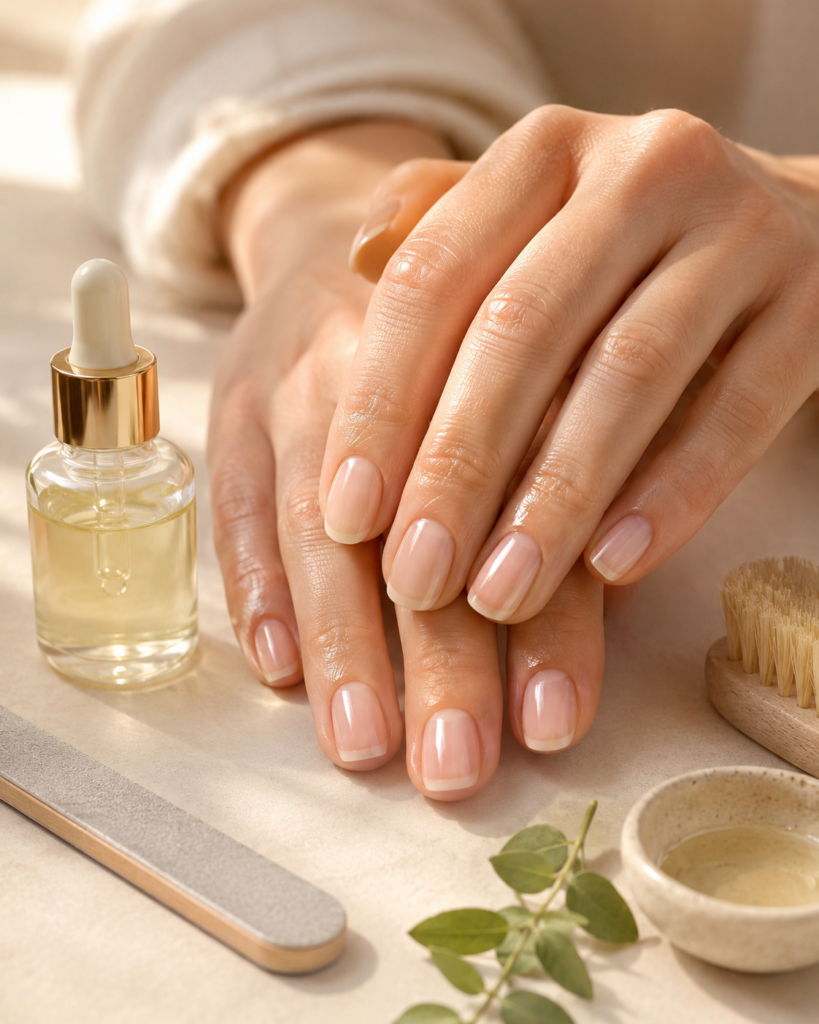
Below, we break down exactly what healthy nails look like, why they break, how to grow them faster, and what your nails might be telling you about your health.
What Does Healthy Nail Growth Actually Look Like?
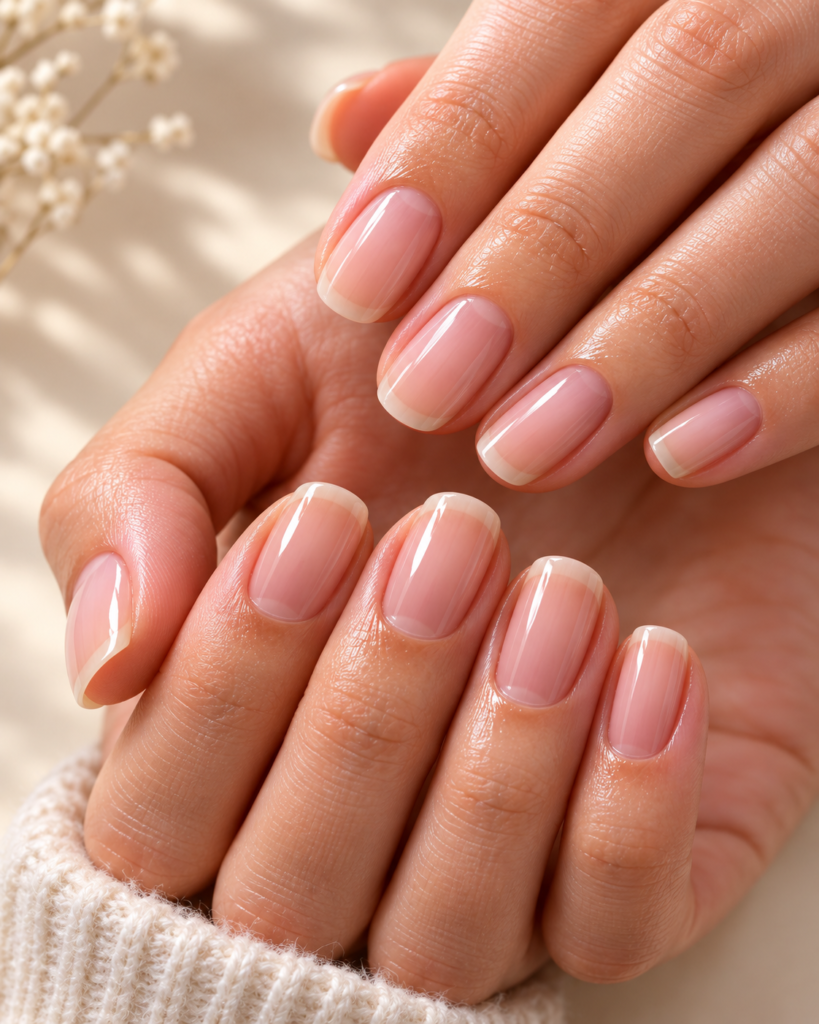
A healthy nail is smooth, slightly pink (from the blood vessels underneath), free of deep ridges, and grows at a steady, predictable rate.
Fingernails grow about 3–4mm per month — a full nail regrows in roughly 4–6 months.
Toenails grow slower, about 1mm per month, taking 12–18 months to fully replace.
Growth speeds up slightly in summer and slows in winter, and it’s faster on your dominant hand.
Nail growth happens at the nail matrix, the living tissue under your cuticle. Everything visible on the nail plate itself is already dead tissue — which is why moisturizing your cuticles (not just the nail) actually matters for future growth quality.
Why Do Nails Break, Peel, or Split?
Most breakage comes down to moisture loss and mechanical stress, not “weak genes.”
Common Causes of Weak Nails
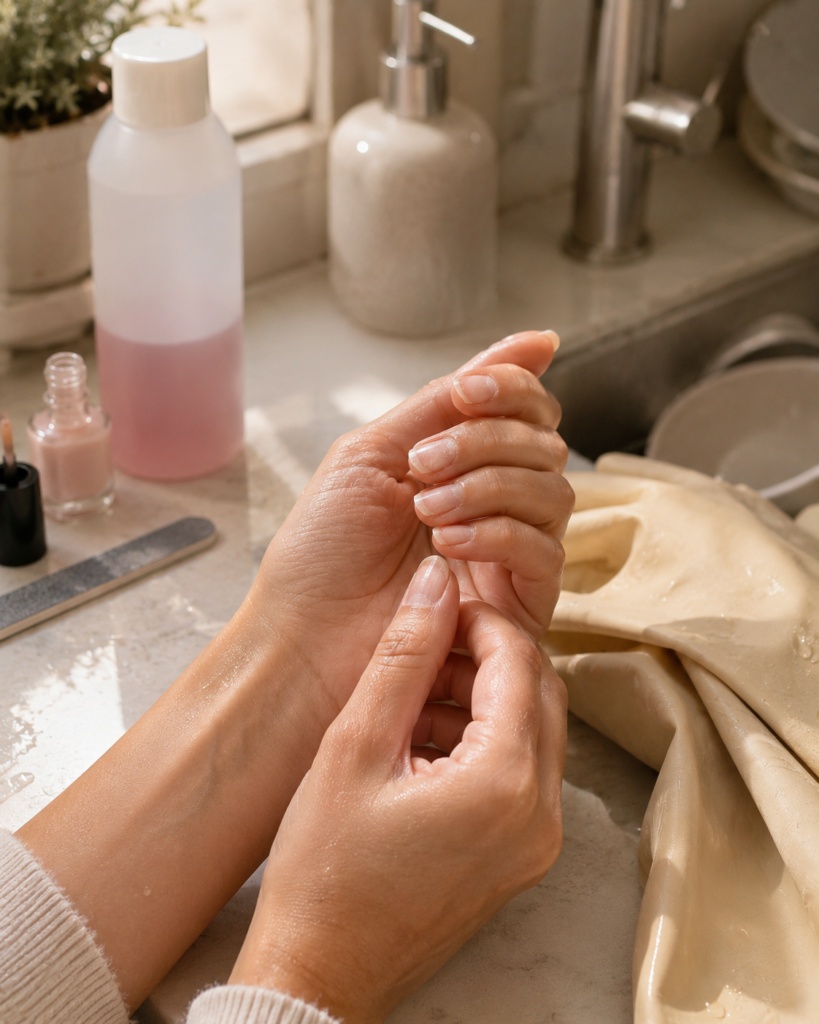
Frequent hand-washing or dish-washing without gloves — strips natural oils
Acetone-based polish remover used too often
Gel or acrylic removal done by peeling/picking instead of soaking off
Low biotin, iron, or protein intake
Using nails as tools (opening cans, scratching labels)
Dry indoor heating or cold winter air
When Breakage Signals a Health Issue
If nails are breaking despite good care — plus you notice fatigue, pale skin, hair thinning, or spoon-shaped nails — it can point to iron-deficiency anemia. Thyroid imbalances can also cause brittle, slow-growing nails. This doesn’t mean every broken nail is a medical issue, but a sudden, unexplained change across several nails at once is a reasonable prompt to check in with a doctor.
How Can You Grow Nails Faster and Stronger?
You can’t dramatically speed up the biology of nail growth, but you can remove everything that’s slowing it down or causing breakage — which is what actually makes nails look longer and stronger over time.
Diet and Vitamins for Nail Growth
Biotin (Vitamin B7): the most studied nutrient for nail strength; found in eggs, almonds, sweet potatoes
Protein: nails are made of keratin, a protein — low intake shows up as brittleness
Iron and zinc: deficiency is linked to ridging and slow growth
Omega-3s: support nail bed hydration from the inside

Daily Nail Care Habits That Work
Apply cuticle oil every night — even under polish
Wear gloves for dishwashing and cleaning
Keep nails at a moderate length; very long nails are more prone to snapping
Take a 1–2 week break from polish every 2 months to let nails “breathe” and rehydrate
Use a nourishing base coat, even without color
What’s the Right Way to Trim and File Nails?
Cutting nails the wrong way is one of the most common (and avoidable) causes of splitting.
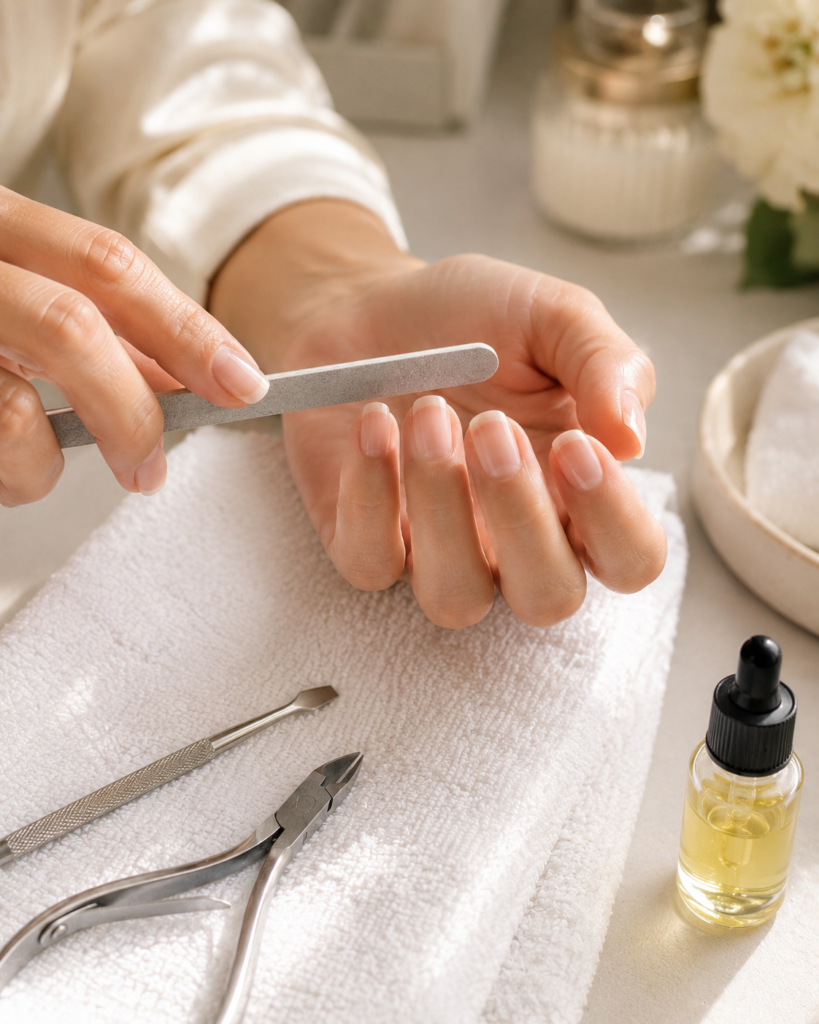
Trim after a shower, when nails are softer and less likely to crack
Cut straight across, then round the tips slightly — avoid deep rounded corners, which weaken the sides
File in one direction only; sawing back and forth causes micro-splits
Push back cuticles gently with a damp towel instead of cutting them — cutting cuticles can lead to infection
Finish with cuticle oil to seal in moisture
Are Gel and Acrylic Manicures Safe?
Generally yes, when done correctly — but there are trade-offs worth knowing.
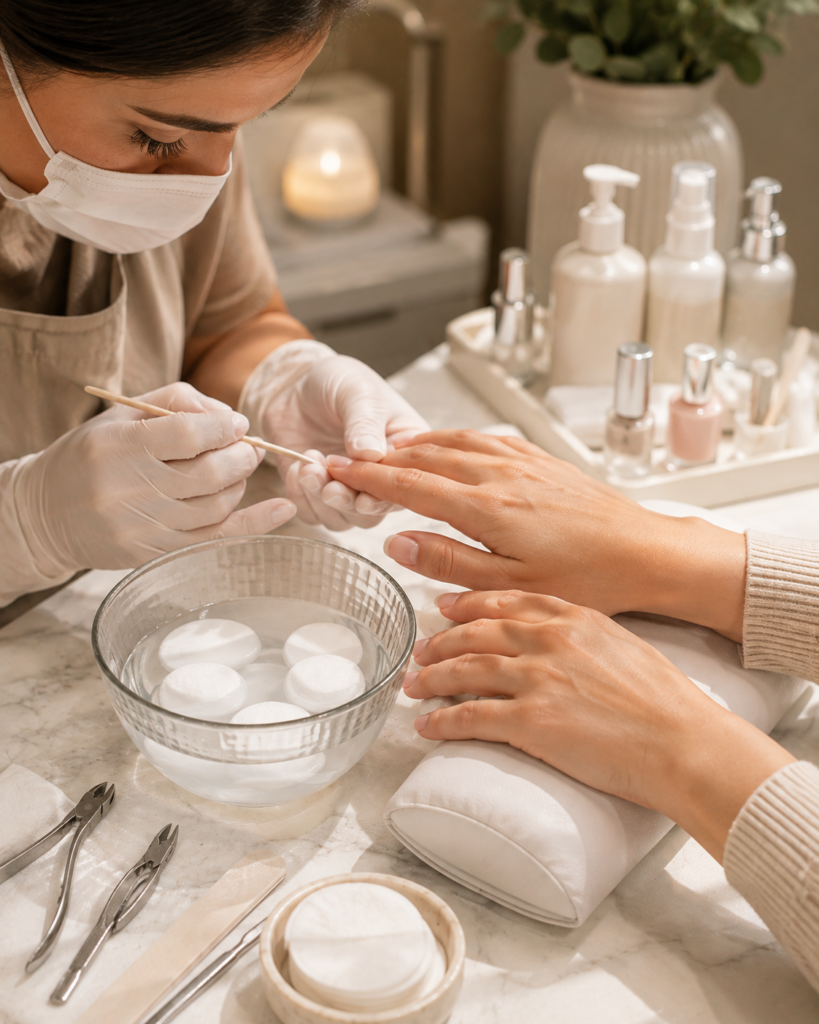
Gel manicures use UV/LED light to cure polish. The main risks are UV exposure (minor but real over years) and nail thinning if soaked off improperly. Always have gel soaked off, never peeled.
Acrylics use a liquid-and-powder overlay. They’re more durable but can weaken the natural nail underneath if reapplied back-to-back for months without a break.
Dip powder sits in between — long-lasting, but removal typically requires acetone soaking too.
Actionable step: whatever method you use, take a break of at least 2–4 weeks every few months, and always let a professional remove it rather than picking it off at home.
What Do Your Nails Say About Your Health?
This is the part most nail-care content skips — but dermatologists actually use nails as a diagnostic clue.
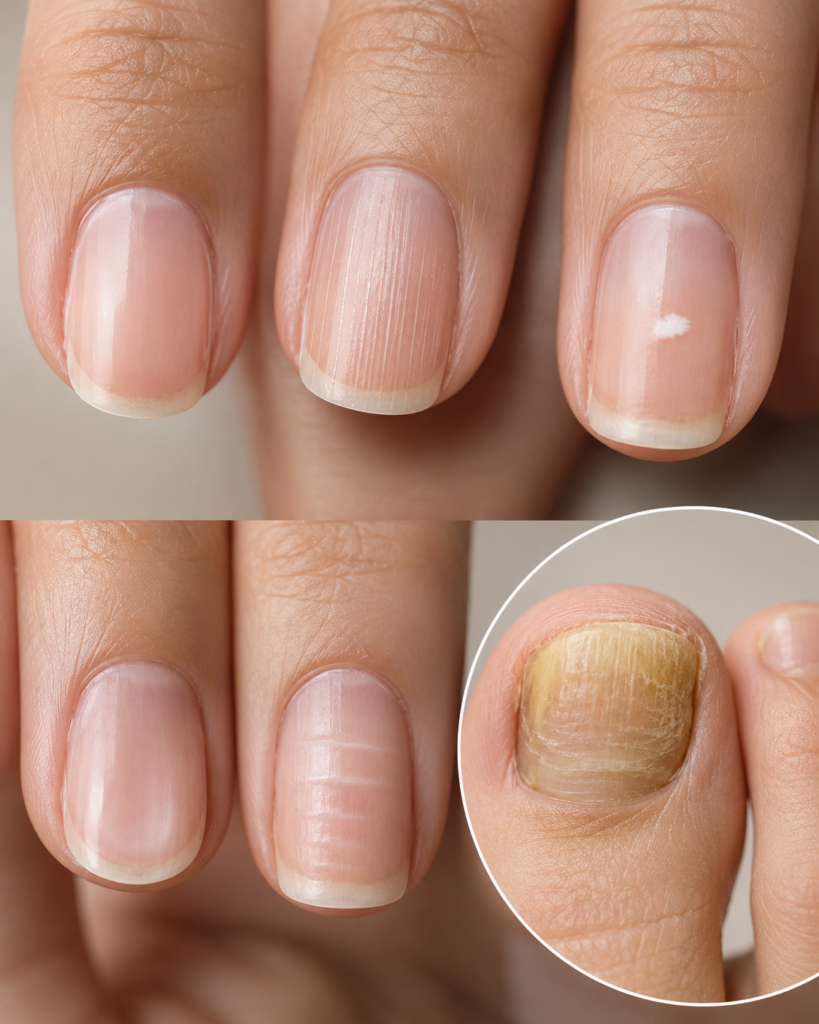
| Nail Sign | Possible Meaning |
|---|---|
| Spoon-shaped (concave) nails | Iron deficiency |
| Vertical ridges | Usually just aging — common and normal |
| Horizontal ridges (Beau’s lines) | Past illness, stress, or nutrient disruption |
| White spots | Usually minor trauma, not calcium deficiency (a common myth) |
| Yellowing, thickening | Possible fungal infection |
| Clubbing (nail curves over fingertip) | Can relate to lung or heart conditions — worth checking with a doctor |
Nails also change naturally with age and menopause, often becoming more brittle and slower-growing due to hormonal shifts — a completely normal pattern that simply calls for more consistent moisture, not alarm.
How Do You Prevent and Treat Nail Fungus?
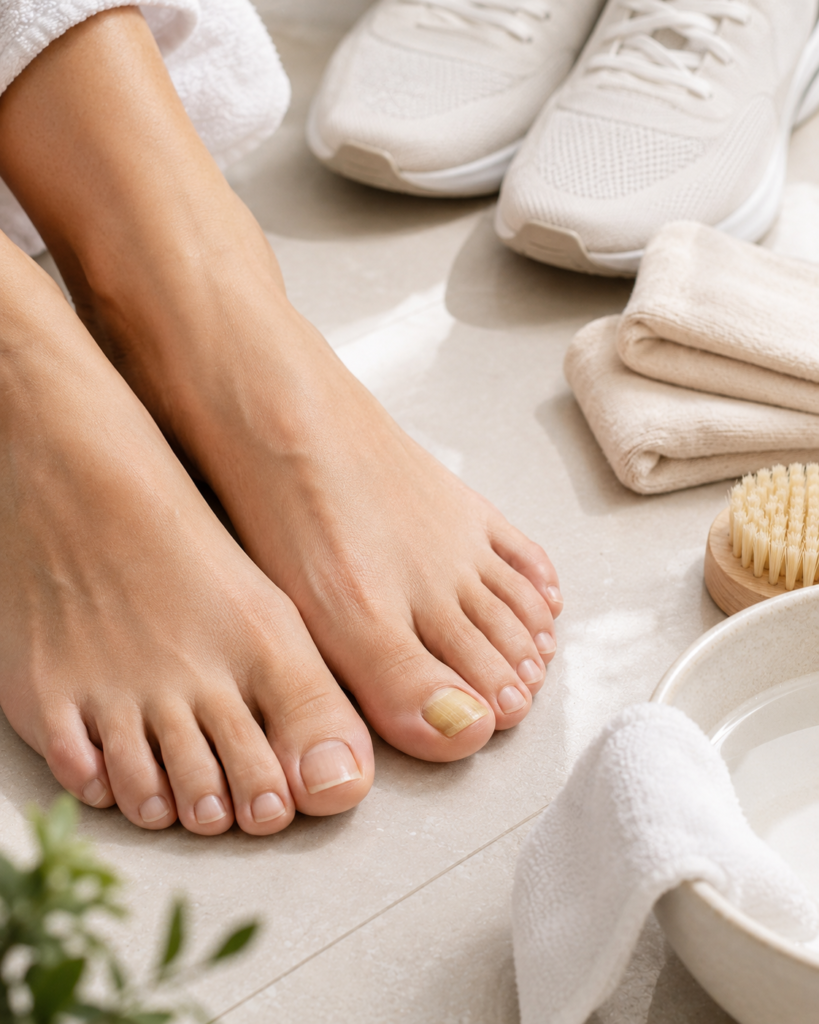
Nail fungus (onychomycosis) causes thickened, yellow, or crumbly nails, most often on toenails.
Prevention:
Keep feet dry; change socks if damp
Avoid walking barefoot in gyms, pools, or locker rooms
Don’t share nail clippers or files
Choose breathable shoes
Treatment: Mild cases sometimes respond to over-the-counter antifungal treatments, but persistent or spreading infections usually need a prescription antifungal from a doctor or podiatrist — home remedies alone (like tea tree oil) are rarely enough to fully clear it.